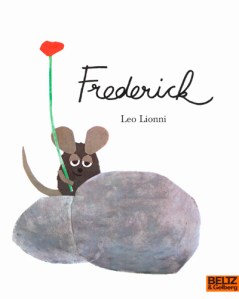
by Leo Lionni
New York: Alfred A. Knopf, 1967
28 pp.
Age: 3+
Interests: mice, poetry, the artist’s life
Also by this author: Swimmy, Inch by Inch, Alexander and the Wind-up Mouse
Talking about children's books and films. Useful information for parents.
19 Aug 2011 Leave a comment
in Books, books 3+ Tags: artists, mice, poetry
by Leo Lionni
New York: Alfred A. Knopf, 1967
28 pp.
Age: 3+
Interests: mice, poetry, the artist’s life
Also by this author: Swimmy, Inch by Inch, Alexander and the Wind-up Mouse
19 Aug 2011 Leave a comment
in Books, books 3+ Tags: Armenia, folktales, fox

CALDECOTT MEDAL WINNER – 1972
by Nonny Hogrogian
New York: Simon & Schuster, 1971
28 pp.
Age: 3 +
Interests: folktales, animals, foxes, Armenian folktales
17 Aug 2011 2 Comments
in Books, Quick Lists Tags: mice
Is there any storybook creature who can win our sympathy quicker than the humble mouse? This wee beastie, less objectionable than a rat and more cuddly than an insect, appears in countless stories as a stand-in for the weak and powerless. When a little mouse triumphs over overwhelming adversity, we all cheer.
And yet… the sympathy does not extend to real life, does it? I remember a time many years ago when my days were occupied with writing charming adventures for adorable mice, and my nights were dedicated to exterminating the rather less adorable mice that were running amok in my apartment.
Ah well… let’s just focus on those more charming, storybook rodents for the moment, shall we?
Here are 10 books featuring mice…
1. Frederick, by Leo Lionni
An artist mouse brings sunshine to his brethren during the long, cold winter.
2. The Gruffalo, by Julia Donaldson
Wee mousie outwits many predators, including a ferocious Gruffalo.
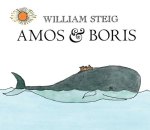
3. Amos & Boris, by William Steig
The story of an unusual friendship between a whale and a mouse.
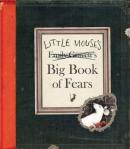
4. Little Mouse’s Big Book of Fears, by Emily Gravett
Little Mouse is afraid of everything. A child’s primer on phobias.
5. The Church Mouse, by Graham Oakley
A church mouse is friends with a peaceable cat; together they foil a thief. First book in the very popular Church Mice series.


1. The Mouse and the Motorcycle, by Beverly Cleary
A mouse befriends a boy and rides about on a toy motorcycle.
2. The School Mouse, by Dick King-Smith
A mouse living in a school decides she’d like to learn how to read too.
3. Stuart Little, by E.B. White
Stuart’s adventures and mishaps in New York City.
4. The Tale of Despereaux: Being the Story of a Mouse, a Princess, Some Soup, and a Spool of Thread, by Kate DiCamillo
The story of a mouse’s quest to rescue a human princess.
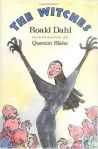
A vast witch conspiracy is undone by a very determined little mouse.
16 Aug 2011 Leave a comment
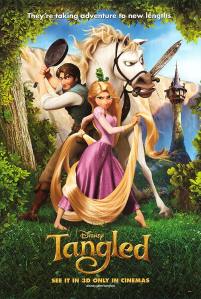
in Movies, movies 5+ Tags: action, chase, Fairy Tale, horses, Magic, Princess, romance
Rated: PG for brief mild violence
Length: 100 min.
Age: 5 and up. Commonsense Media sez: 5 +
Scary Factor: not overly scary, mostly just suspenseful chase scenes; scary-looking thugs in tavern are revealed to be sweethearts; Rapunzel is briefly menaced near the end by villains
Violence: Rapunzel repeatedly knocks Flynn unconscious with a frying pan for comedic effect; Mother Gothel stabs Flynn at the end; Mother Gothel falls to her death – though she disappears before she hits the ground, aged right out of existence
Intense: it appears as though Flynn dies in a very sad scene at the end, but he revives; psychological abuse Mother Gothel inflicts on Rapunzel may trouble some
Bad Behaviour: no bad language; there is beer in the tavern, but this is underplayed
Interests: princesses, fairy tales, magic, romance, horses, action, chases
More
11 Aug 2011 2 Comments
in Books, books 2+, Classics Tags: elves, forest, insects, Magic
by Elsa Beskow
first published in Swedish in 1901
English translation by Alison Sage, 1982
Edinburgh: Floris Books, 2001
32 pp.
Age: 2 +
Interests: magic, forest, little people
Also by this author: Tale of the Little Old Woman, Children of the Forest, Aunt Green Aunt Brown and Aunt Lavender More
11 Aug 2011 Leave a comment
in Books, books 2+ Tags: poetry

GREENAWAY MEDAL WINNER – 1980
by Quentin Blake
London: Jonathan Cape, 1980
30 pp.
Age: 2+
Interests: poetry, eccentric characters, footwear
Also by this Author: Clown, All Join In, Mrs. Armitage on Wheels More
11 Aug 2011 Leave a comment
in Books, books 6+ Tags: art, country life, history, puzzles, travel

by Mitsumasa Anno
originally published in Japan in 1977
New York: William Collins, 1978
42 pp.
Age: 6+
Interests: art, history, country life, travel, puzzles
10 Aug 2011 Leave a comment
in Movies, movies 3+, movies 4+, movies 5+, Quick Lists Tags: Fairy Tale, Princess


Yes, this week it’s a Top 5 x 2! The princess issue is a controversial one these days, but so many little girls love love love their princesses that it’s hard to avoid the whole genre. If you’re giving in to requests for the Disney Princess franchise, but unsure of which movie to start with, I list them here in order of age appropriateness. (And I include one non-Disney.) Generally the newer films are much scarier than the old ones, more violent and with ever more terrifying villains.
There is a raft of other, mostly live-action “princess-themed” movies out there (Princess Diaries, et al), but I’m sticking to the basic fairy tale and revised fairy tale versions here. (Click on the titles with links to go to full reviews.)
So dig out your tiaras, friends… here we go…
1. Disney Princess Enchanted Tales – Follow Your Dreams (2007) – age 3+
Real entry-level fare. A straight-to-video offering, includes two short stories about the everyday lives of Aurora (Sleeping Beauty) and Jasmine (Aladdin). Mediocre entertainment, but innocuous for even the youngest princesses.
2. Cinderella (1950) – age 4+
The villain here is just a very mean lady, no evil magic or mayhem involved, so this isn’t as scary as many other movies. At the same time, it’s got an overload of lovey dovey romance, which isn’t such a perfect fit for the very young.
3. Snow White and the Seven Dwarfs (1937) – age 4+
This one started it all, in terms of princess movies, but also in terms of feature-length animation. Still lovely to look at after all these years, this movie has aged beautifully. Snow White predates the sexier Disney princesses, so she’s actually got a somewhat realistic shape for a young girl. And the dwarves are still pretty funny.
4. Thumbelina (1994) – age 4+
Aha, not a Disney movie, I know. This lesser-known Don Bluth film tells another classic princess tale, this time by Hans Christian Anderson, and stays pretty faithful to the original. Teeny tiny heroine is kidnapped by toads, menaced by bugs and almost married off to a mole, while the brave prince of the fairies searches for her.
5. Sleeping Beauty (1959) – age 4+
The reviews at the time were not kind, but I really like this one. It’s elegant and gorgeous, with some dignity and restraint. A fairly straight-ahead presentation of the traditional tale (with a few alterations). The music is sublime. Maleficent is truly spooky, and the dragon at the end is scary but the battle is quite short.
6. Tangled (2010) – age 5+
Even though this was rated PG for mild violence, and all others on this list are rated G, it is much less scary than the titles below. Some bonking with a frying pan, and a stabbing (he recovers).
7. Beauty and the Beast (1991) – age 5+
One of the modern-era Disney flicks, the violence is heightened in this one. The Beast is truly terrifying at the start, but soon becomes nearly cuddly. Lots of slapstick and fighting. Two terrific song sequences.
8. The Little Mermaid (1989) – age 5+
The first modern princess movie from Disney, and the one that revived the entire company. This set the pattern for the Broadway-style musical films that Disney still churns out. Music and characters are good, but villainess Ursula the Sea Witch is very, very scary. And they give the Anderson tale a happy ending.
9. The Princess and the Frog (2009) – age 5+
A total twist and remodelling which bears no real relation to the old Grimms tale. Characters are engaging, voodoo sequences quite frightening, one death near the end makes this more suitable for older preschoolers.
10. Aladdin (1992) – age 6+
Not one of my favourites. The songs zip along so fast I couldn’t keep up, the racial slurs are frequent, Jasmine is plucky but scantily clad at all times, Robin Williams tells jokes no child will get, and the scary is very.
So which ones are actually great films? My short list…
1. Snow White and the Seven Dwarfs (1937)
Magical and enchanting. Prince is stiff and Snow White’s voice is annoying, but that’s the worst of it.
2. Sleeping Beauty (1959)
I said it before, I’ll say it again: Elegant and gorgeous.
Hmm. Pretty short list. Both are absolutely beautiful, have just enough loyalty to the original tale to retain a little magic, and just enough of the dark side to have some bite… without beating us over the head with the awesome forces of the powers of evil, yadda yadda. And no A-list actors doing the voices, either – another irritating and distracting trend of late.
08 Aug 2011 Leave a comment
in Books, books 5+ Tags: boats, ocean, pirates, strong girls
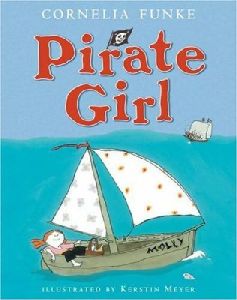
Cornelia Funke, author
Kerstin Meyer, illustrator
New York: Scholastic, 2003
30 pp.
Age: 5+
Interests: pirates, strong girls, ocean, boats
Also by this author: Inkheart Trilogy, Picturebooks: The Princess Knight, The Wildest Brother, Princess Pigsty More



 Rarest Kind of Best
Moral Lessons in Fairy Tales
12 Aug 2011 1 Comment
by Kim in Commentary Tags: Fairy Tale
I am delving into the world of fairy tales again, drawing primarily from Bruno Bettelheim’s The Uses of Enchantment: The Meaning and Importance of Fairy Tales…
As a young child struggles to make sense of the bewildering world around him, he also strives to understand and gain control over his own emotions and desires. He needs “a moral education which subtly, and by implication only, conveys to him the advantages of moral behavior.” ¹
One of the most basic goals of literature written for children is to impart moral lessons and encourage moral behaviour. Because the ethical lessons in fairy tales are understated and at times even buried, these stories were widely accused in the 18th and 19th century of being amoral, or even immoral and thus unsuitable for children. Fairy tales don’t beat you over the head with the lesson, like other chidren’s literature of the time (and our time as well).
Le Chat Botte by Gustave Dore
It’s true that there are a few stories within the fairy tale tradition which seem rather obviously amoral – “Puss ’n’ Boots” and other ‘trickster’ tales. Bettelheim believes that these stories serve an entirely different purpose than the majority of fairy tales, that of “giving the child the hope that even the meekest can succeed in life. … Morality is not the issue in these tales, but rather, assurance that one can succeed.” ²
As well, in most fairy tales there is a definite sense that, yes, bad things can happen to good people, which in its own way may be a useful lesson for children to learn.
“In the old European fairy tale … [v]irtue and hard work are punished as often as they are rewarded and, in some perverse way, this knowledge absorbed from the old tales always proves exhilarating, even liberating, for children. Such stories tell us that the future cannot be read with certainty … Capricious events may well bring unexpected alterations, for good or evil. The fairy tale’s ultimate message is that there is a magic to existence that defies charting.” ³
Amoral tales and general capriciousness aside, fairy tales do teach moral lessons. (When all is said and done, and Red Riding Hood has escaped the wolf, doesn’t one come away with the conviction that she should have obeyed to her mother and not loitered about talking to strangers?) Other ancient literary forms may be more obvious with their moralizing, but it is this obviousness which Bruno Bettelheim believes makes them far less effective when it comes to instilling moral behaviour in youngsters.
“… the dominant feeling a myth conveys is: this is absolutely unique; it could not have happened to any other person, or in any other setting; such events are grandiose, awe-inspiring, and could not possibly happen to an ordinary mortal...” ⁴
In contrast, fairy tale heroes are Everyman. So much so that they are almost never given names, other than ‘the Woodcutter’, ‘the Old Woman’, ‘the Swineherd’, ‘the Youngest Daughter’, etc. An Everyman is someone we immediately identify with, because he or she is ordinary, just like us. And if we identify with them, we learn from their mistakes and are lifted up by their successes.
FABLES are the most moralistic story form, for they tell us directly, in no uncertain terms, what we should do. Aesop’s Fables in particular have certainly lasted through the centuries, but they don’t exactly hold the warm place in the hearts of children that fairy tales do. For example…
Pig by L. Leslie Brooke
“The Three Little Pigs” (fairy tale) and “The Ant and the Grasshopper” (fable) both attempt to teach us not to be lazy and take the easy way out, for if we do, we may perish. The fable explicitly tells us what to do:
“Moral: We should always make plans for the future.” ⁵
The fairy tale, on the other hand, tells an entertaining story and leaves all further interpretation up to us. In doing so, the “Three Pigs” is able to win over the listener first and let the moral sink in afterward. (Unless you are reading a modern variant of the tale, in which the author is compelled to be preachy.)
The Ant and the Grasshopper by Charles H. Bennett
Another reason the Pigs are more effective than Aesop’s tale is that the Ant is such an a**hole. He has no compassion for the suffering grasshopper, no generosity of spirit, no forgiveness. The Ant is not in the least bit admirable, and it’s a rare reader who doesn’t feel sympathy for the Grasshopper instead.
Bettelheim writes that, in a child’s mind, the likeability of the hero or heroine is key:
“It is not the fact that virtue wins out at the end which promotes morality, but that the hero is most attractive to the child, who identifies with the hero in all his struggles. … The child makes such identifications all on his own, and the inner and outer struggles of the hero imprint morality on him. … a child’s choices are based, not so much on right versus wrong, as on who arouses his sympathy...” ⁶
And finally…
“The question for the child is not ‘Do I want to be good?’ but ‘Who do I want to be like?’ “ ⁷
_________________________________
¹ Bruno Bettelheim, The Uses of Enchantment; The Meaning and Importance of Fairy Tales. (New York: Random House, 1975) p. 5
² Ibid., p. 10
³ Selma G. Lanes, Down the Rabbit Hole; Adventures and Misadventures in the Realm of Children’s Literature. (New York: Atheneum, 1971) p. 94
⁴ Op. cit., Bettelheim, p. 37
⁵ Aesop, Aesop’s Fables. (New York: Macmillan, 1989) p. 24
⁶ Op. cit., Bettelheim, p. 9
⁷ Ibid., p. 10