Top 5: Bedtime Books for Toddlers

At bedtime the little ones are always restless and one way to calm everyone down is a real bedtime book… a book about bedtime, and sleep, and yawning, and… oh, pardon me, I nodded off there for a moment.

Here are five rather excellent and beautiful bedtime stories that you may not know about. (Note: No Goodnight Moon on this list – everyone knows about that one already!) Click on titles for full reviews.
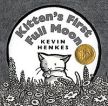
1. Kitten’s First Full Moon by Kevin Henkes – infant+

Simple and funny. Kitten thinks the moon is a bowl of milk.

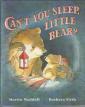
2. Can’t You Sleep, Little Bear? by Martin Waddell – age 2+

All about getting settled for sleep, starring a very patient parent.

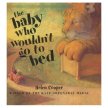
3. The Baby Who Wouldn’t Go to Bed by Helen Cooper – age 2+

Baby wants to keep playing but his toys are sleepy.

4. One Snowy Night by Nick Butterworth – age 3+

Very funny. All the animals in the park are looking for a warm place to sleep, so they descend on the park-keeper’s little house.

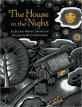
5. The House in the Night by Susan Marie Swanson – age 3+

Dreamy and gorgeous. A girl imagines she is flying over the countryside at night, all the way to the planets and stars.

And, what the heck, here’s a bonus, one I haven’t reviewed on this blog but that we’ve read and listened to countless times:
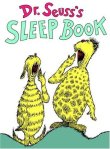
Dr. Seuss’s Sleep Book by Dr. Seuss – age 2+

A chronicle of all manner of creatures going to bed – yawners, sleepwalkers, sleeptalkers, snorers and dreamers. It’s a little long, but brilliant in its pacing, gradually slowing and mellowing until the final “Good night.” We have a fantastic CD version of it which we’d listen to while following along in the book. The narration, music and fx are terrific and the sound of all those yawns will definitely get you and your toddler yawning too. (Here’s the link to the CD on amazon.)

Goodnight!

Picture Books – Best of 2012 lists

Glazomania strikes! (love/obsession with lists)*

We all must start thinking of holiday gift ideas, I suppose, so here are a few lists of excellent children’s picture books from 2012:

Publisher’s Weekly Best Picture Books of 2012

New York Times Best Picture Books of 2012 (annoyingly, in slide show format)

American Library Association’s Best Children’s Books of 2012 (long list, all categories)

Canadian Children’s Book Centre list – for some Cancon! (scroll down for picture books)

Goodreads 2012 Picture Book Semifinalists (voted on by Goodreads members)

Amazon’s Best Children’s Picture Books 2012

How about some award-winning Science Books?

For UK titles, you can download the 2012 Best Book Guide from the Book Trust here – 10 titles in each age category (5 and under, 5-8, 9-12, Teen and Young Adult), and I also love that they give both the Reading Age (at which the child can read the book on his/her own) and an Interest Age (when the child will start to enjoy this book).

*thanks to my friend Ellen for teaching me that word yesterday!


Random House list of YA novels Every Adult Should Read

This is a pretty good list, entitled 11 YA Novels Every Adult Should Read.

I’m typing it out here for you, because I am annoyed by those lists that you have to click ‘next’ to see each individual item, like a slide show. (Perhaps I am rather too easily annoyed.)

1. Blood Red Road – Moira Young (2011)

2. Anne of Green Gables – Lucy Maude Montgomery (1908)

3. Miss Peregrine’s Home for Peculiar Children – Ransom Riggs (2011)

4. Harry Potter and the Philosopher’s Stone – J.K. Rowling (1997)

5. The Book Thief – Markus Zusak (2006)

6. The Curious Incident of the Dog in the Night-Time – Mark Haddon (2003)

7. The Giver – Lois Lowry (1993)

8. The Hunger Games – Suzanne Collins (2008)

9. The Perks of Being a Wallflower – Stephen Chbosky (1999)

10. Wonder – R.J. Palacio (2012)

11. The Taming – Teresa Toten and Eric Walters (2012)

I’ve added the years of publication because, amusingly, the Random House site says

The genre ‘young adult’ clearly signifies that the books are meant for teenagers, but sometimes it’s nice to take a trip down memory lane and relive our younger days.

Since most are relatively new books – 4 were released in the last 2 years – I’m not sure what kind of nostalgia factor is involved here. Perhaps they are talking to Adults who have just turned twenty-one…

For some older classics I might add The Secret Garden, Treasure Island, The Hobbit, The Adventures of Huckleberry Finn, The Phantom Tollbooth..

What do you think? What great pre-2000 YA novels would you add?

Going Solo


Going Solo

by Roald Dahl

London: Jonathan Cape, 1986

210 pp.

Age: 10+

Interests: biography, travel, Africa, adventure, airplanes, war, history

Also by Roald Dahl: Boy: Tales of Childhood (autobiography about the years preceding this book)

Related Posts: A Roald Dahl Reading List More

How to Be a Musical Family (and Why You Should)

I’m linking here to a terrific bit of advice, 10 Ways to Be a Musical Family by Nancy Salwen. Nancy runs workshops for kids and adults and her focus seems to be on helping non-musical adults bring music into their homes for their kids.

One aspect of family music-making that I think is very important is that your children get to see you – the infallible grownup – learning, fumbling a bit, making mistakes. Not always hitting the right note but persevering and having fun along the way. If we jump in like this we get to model what we’re always telling them to do in their classrooms and extracurriculars: don’t worry about not being good right away, have fun, keep learning, keep trying, and keep practicing.

Too often we stop trying new things as we get older, and stick to activities that we’re already good at. Our kids only see us playing sports or making art or playing instruments that we have some proficiency at. They may conclude that we never have difficulty with things like they do*, and this could feed their frustration when they attempt new activities with a significant learning curve.

Personally, I think every parent should take up a brand new musical instrument or difficult sport when their child hits about age six or seven, and is coping with new challenges daily!

I also think there is value in demonstrating the enjoyment of being an amateur at something. Just because a person doesn’t have Broadway-calibre talent doesn’t mean they can’t enjoy singing or dancing. These days any interest in the arts for the young seems inextricably linked to a pursuit of excellence and stardom – winning competitions and clawing your way to the top. It’s always valuable to re-emphasize the fun, camaraderie and joy of making music.

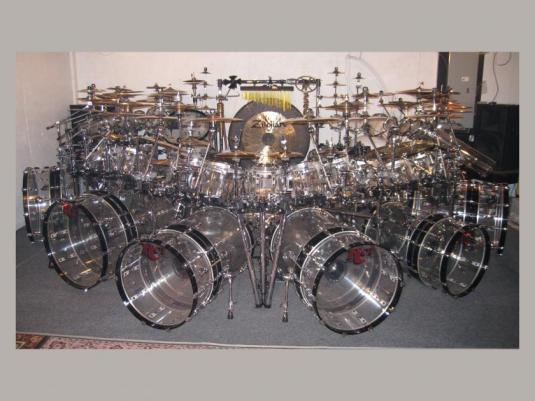
To put my money where my mouth is… we’ve been in our new house for almost a month now, and this afternoon I WILL unpack and assemble my looooong neglected drum kit, which I am spectacularly inept at playing. Woo hoo!

not my drum kit

______________________

* Of course I’m talking here about the younger years, pre-adolescence. Once our kids hit twelve or thirteen they know for a fact that we can’t do anything right.

‘Back to Basics’ When Teaching Kids to Write

English: School room.

English: School room. (Photo credit: Wikipedia)

If you are at all interested in literacy and education, you should find this article from the Atlantic really fascinating. It talks about correcting the pendulum-swing of faddish educational practices, and going back to teaching students how to write – how to build proper sentences and paragraphs and how to organize your thoughts into essay form. Nouns and verbs and prepositions and clauses and all that old-fashioned stuff.

It’s pretty convincing, and it’s quite interesting to follow the efforts of a staff of high school teachers in New York as they analyze why their students are unable to write effectively.

Unfortunately the issue is framed by some as a creative writing vs. essay writing battle. Emotions and self-expression vs. disciplined intellectual structure. I think the real sweet spot is in the middle, balancing both aspects of writing.

Banned Books Week

“Banned Books Week is an annual event celebrating the freedom to read. Typically held during the last week of September, it highlights the value of free and open access to information. Banned Books Week brings together the entire book community –- librarians, booksellers, publishers, journalists, teachers, and readers of all types –- in shared support of the freedom to seek and to express ideas, even those some consider unorthodox or unpopular.”  – ALA website

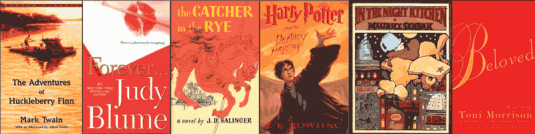
Why not read a banned book this week? There are lots to choose from. Here’s a list of “Banned Books That Shaped America”. (I’m rereading The Adventures of Huckleberry Finn.)

And here’s an interesting article about some banned children’s books.

Top 5: Pre- Harry Potter Reads

As I wrote yesterday, Harry Potter books (and movies) can be pretty scary and intense for younger children. If your child is intrigued by magic and fantasy, but you’re not certain she or he is quite ready for Hogwarts, here are a few fantasy titles they may be more comfortable with.

(Click on the titles to see full reviews.)


Top 5: Beginner Fantasy Chapter Books


1. The Cuckoo Clock by Mrs. Molesworth – age 5+

A very sedate and old-fashioned (1877) story about a girl who visits some magical places and learns to behave herself a little better.

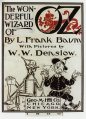
2. The Wonderful Wizard of Oz by L. Frank Baum – age 5+

Quite different from the movie – a rambling, weird tale with a few scares and dustups along the way. (NB. some violence: see full review.)

3. Half Magic by Edward Eager – age 5+

One of my childhood favourites. This and other titles by Eager are lovely stories about children who come across something magic and mess things up a little. Slightly old-fashioned but charming and full of insight about sibling relations.

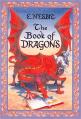
4. The Book of Dragons by E. Nesbit – age 6+

Snappy and very funny short stories, each about a very unique dragon.

5. The Enchanted Castle by E. Nesbit – age 6+

Nesbit books like The Enchanted Castle and Five Children and It inspired Edward Eager’s work, and are similarly about children who acquire some kind of magic and mismanage it with amusing or chilling results. This title in particular has one very creepy sequence.

And Two bonus titles… Rather long and wordy, only for the most hardy listeners (and readers).

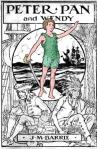
6. Peter Pan by J.M. Barrie – age 6+

Find an abridged version if you can. (But NOT a Disney version!) The plot is captivating, but the original novel is a very dense read, and tangled with tangents.

7. The Princess and the Goblin by George MacDonald – age 6+

Goblins living under a mountain plot to kidnap a Princess, but she is aided by the ghost of her great-great-great grandmother and a courageous miner boy. Another very old classic, creepy and intriguing, but a trifle loooong and slow to get going. (Not sure if there are any abridged versions out there.)

As you can tell, my tastes go to the older, classic novels. I must start reading some newer books!

If you have any suggestions for early fantasy books, new or old, please share them!

What Age is Right for Harry Potter?

My six-year-old is loving stories about magic and strange creatures, and it occurred to me that we might be ready to wade into Potter-mania. Maybe. I think. Or maybe I should wait. Isn’t it too scary? Too violent? Too intense?

Fortunately I’ve come across this succinct bit of advice on Commonsense Media re. what ages are best for all the Harry Potter books, movies and games.

Here’s the gist of it… At age 6 or 7 it’s fine to read first book to them aloud (Harry Potter and the Sorcerer’s Stone), and maybe watch the first movie.

After that the books and movies ramp up pretty quickly, agewise. You should check out the link for greater detail, but the last book, and the movies from Goblet of Fire onward are more appropriate for age 11 or 12.

Also included in the article are recommended ages for the various Harry Potter video games.

There really shouldn’t be any rush to put HP into your child’s hands, after all there are many, many fantasy books and movies out there more suitable for ages 5, 6, or 7, titles that are tamer, less violent and scary, and just not so grim. I’m working on a list of these right now, to be posted soon, I hope!

Let me know if you have any suggestions!

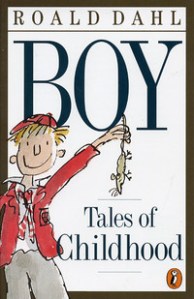
Boy: Tales of Childhood

Boy: Tales of Childhood

by Roald Dahl

London: Jonathan Cape, 1984

160 pp.

Age: 9+

Interests: biography, history, nonfiction, British boarding schools, family history

Next: Going Solo (the sequel to this book), also War Boy: A Country Childhood by Michael Foreman

Related Posts: A Roald Dahl Reading List

More

Previous Older Entries Next Newer Entries

All writings posted here are © Kim Thompson, unless otherwise indicated. For all artwork on this site, copyright is retained by the artist.