Death in Children’s Books

Here’s a great essay from the Random House website Hazlitt – Life and Death in Children’s Books by Jowita Bydlowska. I like her point “what’s better than books to ruin a child’s innocence?”

I’m also more than a little smitten with the 18th century children’s book that would make your hair stand on end – Der Struwwelpeter. It’s particularly fascinating because children are much less horrified by it than their parents. (Generally. It’s still not for everyone, I hasten to add.)

Der Struwwelpeter: Die gar traurige Geschichte...

Der Struwwelpeter (Photo credit: Wikipedia)

Oh Those Devices! Gentle Play Apps for the Very Young

I’m betting an awful lot of kids out there received some fancy gadget or another under the Christmas tree. If you’re looking for suggestions about what apps to put on them, Commonsense Media has posted this helpful list of educational apps, listed by device (iPad, iPhone, Android Tablet, Android Phone, Kindle Fire) and then by age.

In our house we’re marking our first anniversary of iPhone / iPad fun. We’ve done a few of the blockbuster competitive games – the ones that focus on working ever upward in difficulty, unlocking new levels, earning points or virtual cash, and always trying for a new high score – but I’ve never been too keen on games that are designed to get you addictively playing them for hours on end. I love the more calming apps, ones that don’t score, don’t have a timer clicking down, and don’t whip kids into a frenzy at bedtime. (or ever)

My favourite discoveries of the past year have been the non-competitive, more creative apps. Here are a few of the ones we have enjoyed… (iPhone/iPad apps)

Toca Hair Salon (Toca Boca)

Toca Hair Salon

Mick (Toca Tailor Fairy Tales)

Toca Tailor Fairy Tales

TOCA BOCA games!

There are lots of them, and they are all way cool. The design is unusual, the characters are funny and appealing, the activities are creative, gentle and non-competitive. (What a nice break from the majority of game apps!)

Some Toca Boca apps, like House, Store, and Tea Party, are designed for preschoolers, with age appropriate activities – simply moving items back and forth to accomplish simple tasks. I particularly like the House one, because it’s all about housecleaning!

Kitchen (Toca House by Toca Boca)

Toca House

Toca Robot Lab (Toca Boca)

Toca Robot Lab

The Hair Salon, Tailor, Robot Lab, and others are aimed at slightly older kids, maybe 5 – 8 year olds, but they are quirky enough to appeal to even older kids and simple enough to entrance the preschoolers as well. These are All-Ages Apps!

In our house Toca Hair Salon has been a particularly enduring favourite with my six-year-old, especially now since they’ve put out a new edition (Hair Salon 2). And I am particularly thankful to this app for diverting her from those dreadful beauty salon apps in which you put makeup on glassy-eyed, Barbie-like supermodels. Oorg.

Toca Tailor also deserves a special mention because it includes the intoxicating possibilities of taking a photograph of a fabric, texture, background, or person, and using it to create your clothing designs. (My daughter became entranced with taking a photo of the girl wearing a photo of herself wearing a photo of herself wearing a… )

(Check out Toca games here.)

My Playhome

My Playhome

This one is not a Toca game, but also great for preschoolers: My PlayHome – A simple playhouse where you move family members and objects around a house. Simple but compelling, and again, a gentle, stress-free app.

Future posts to come: art apps, music apps, math apps, science apps… I don’t presume to review every app out there, but whenever we come across a great one, I will certainly let you know!

Related RKOB Posts

The Land of Apps

More on Gadgetry

Websites and Apps for Kids – Recommendations

Fantasia (1940)

Fantasia (film)

(Photo credit: Wikipedia)

Released: 1940

Rated: G

Length: 120 – 124 min. (varies depending on what version you have)

Age: some parts 3+, others 5+ (see below)  Commonsense Media sez: 6 +

Scary Factor: Mickey attacks renegade broom with an axe and savagely chops it to bits; battle to the death between two dinosaurs; a gigantic devil rises over a mountain commanding a host of demons, the dead rise from their graves

Also: some modest (dare I say artful) nudity among fairies and mythological creatures; much wine drunk by very tipsy god Bacchus

Interests: classical music, fairies, mythology, dinosaurs, ballet

Next: the movie Fantasia 2000; live symphony concerts for children; Nutcracker ballet live or movie version
More

Martin Scorsese on Visual Literacy

Here’s a great 2006 interview with the director, in which he makes the case for teaching young people visual literacy by watching and making movies. (courtesy of Edutopia)

With the increasing dominance of media imagery in our daily landscape, it’s important that our children learn how messages are put together, how their eyes are being directed, how their emotions are being played, and maybe even how to craft images themselves. After all, the rise of digital media has made image collection and manipulation available and affordable for everyone. The next generations are increasingly going to be confronted, pummelled, swayed and played by the media-makers, and basic visual literacy will help them negotiate this new landscape.

The Problem With the News

tv

It’s been a bad week in the news. There’s never really a good week in the news, because the main function of the news is to tell you all the bad stuff, but this week was particularly awful. As adults, we can put these stories into some kind of perspective. Usually. Not always successfully, on a week like this one. Because it’s really hard to shake off the sense that threat is everywhere and disaster waits around every corner.

If it’s hard for us, think how much harder it is for children to process disturbing news stories. Not just the stories, but the relentless images that accompany them – distraught people, photos of the victims, disaster zones, war zones, fires, crumbling buildings, the wounded, the dead.

I stopped watching television news long ago, partly because I don’t have time for it but also because the reporting was becoming too sensational and, frankly, too stupid. The radio has provided me with ample information of current events, and in a much less disturbing manner.

Until this week. Whenever my daughter was around I found myself lunging across the room to click off the radio whenever a newscast began… every hour on the hour. The way the story was being handled just made me sick, so I wasn’t sorry to give up on my radio news entirely. (What put me over the top was a snippet I heard before shutting it off, in which a reporter was asking someone if any of the child victims suffered.)

I’ve come across a couple of helpful links here for parents who want to reassure their kids about recent events – some advice on how to console your children and make them feel secure and safe.

Fred Rogers on Tragic Events in the News

PBS: Talking With Kids About News

Commonsense Media: Explaining the News to Our Kids

As for us, we’ve been on a media fast for this week of tragedy. When I shield my daughter from newscasts, am I preventing her from learning about the world? Only if you think the nightly news is an accurate and balanced portrayal of that world. Until our broadcasters show a little more taste and restraint when reporting on the tragedies of the day, I am glad to just leave the radio off.

In a previous post I wrote about what scares children of different ages, and touched upon the effect of news reports – What Scares Your Child.

Family Christmas Movies – a List

Commonsense Media is my go-to source for checking out the age appropriateness of movies, and here is their list of the most well-known holiday movies, and some not so well known.

Scrooge's third visitor, from Charles Dickens:...

Scrooge’s third visitor, from Charles Dickens: A Christmas Carol. In Prose. Being a Ghost Story of Christmas. With Illustrations by John Leech. London: Chapman & Hall, 1843. First edition. (Photo credit: Wikipedia)

My 6 1/2 yr old and I are definitely going to watch A Christmas Carol, but a different version – I’ve got the Alastair Sim version from 1951 on VHS. I think the Dickens classic is a terrific choice, not just for the Christmas theme but also as an introduction to other Dickens works, and a great period piece drama as well… nice for the young ones to see something from another time period. (Unbeknownst to my daughter, this is early training for watching the 6 vol. version of Pride and Prejudice with me some day!)

NB. Commonsense rates my 1951 version a little older (age 7), and says it’s darker than the 1938 film.

One thing I particularly like about A Christmas Carol is that it’s kind of a conceptual bridge for kids. They see so many black-and-white bad guy-good guy stories that it’s interesting to see what they think about a bad guy who is not only the main character, but becomes a sympathetic figure and eventually turns good. Very good. And the triumphant, warm ending is a great payoff for viewers of any age.

Related Posts:

On Dickens and school reading

More recommended books of 2012

I just keep coming across these things…

Quill & Quire – Books of the Year 2012: Books for Young People for 5 great titles (2 picture book and 3 chapter books)

Kids Review Books for Kids, from the National Post – I love these reviews. So direct and straight to the point!

Canadian Children’s Literature Award Winners for 2012

And a big batch o’ books from Pinterest.

There. Now you can get your Christmas shopping done!

Make Your Own Tutu!

Thanks to Different Solutions on Facebook, here’s a no-sew tutu I think even I could make!

For Wizard of Oz book fans…

Title plate of The Wonderful Wizard of Oz (not...

Title plate of The Wonderful Wizard of Oz (not the cover, it’s the interior title page), 1900 Wizard (Photo credit: Wikipedia)

The blogger Maple Leaf Mommy (aka Deanna) is a hardcore fan of the original Wizard of Oz books. We’ve only read the first and most famous (see my review of The Wonderful Wizard of Oz here), but if you’d like to learn about the other Oz books, check out her commentary and book list. She’s even included links to free electronic versions; since the books are largely in the public domain, they can be found for free online.

Great Link: How to Avoid Terrible Children’s Books

Here’s a link for parents, not kids (the language is a little, um, strong):

If You Give a Mouse a Cookie, You’re F*#&ed: 10 Tips for Avoiding Terrible Children’s Books, on a site called Dadspin.

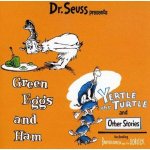
While the piece is written mainly for humour, the basic tips are oh-so-true. My only addition would be with regard to the repetitive books: when story repetition starts getting you down, just make your kids do the work. The repetition means they know what’s coming, and having them chime in the endings to the sentences will make Green Eggs and Ham simply fly by. It also helps to listen to the excellent, rather beatnik version available on CD which, thanks to narrator Marvin Miller and a bongo player, really swings.

(And I just finished raving about another CD in this Seuss series – see last post. They really are great.)

Previous Older Entries Next Newer Entries

All writings posted here are © Kim Thompson, unless otherwise indicated. For all artwork on this site, copyright is retained by the artist.