
GREENAWAY MEDAL WINNER – 1975
by Victor Ambrus
Oxford, 1975
39 pp.
Age: 10+
Interests: nonfiction, history, horses, war, knights
Also by this author: The Three Poor Tailors, Mishka, Drawing Animals, Drawing on Archaeology
Talking about children's books and films. Useful information for parents.
12 Mar 2012 2 Comments
in Books, books 10+ Tags: American history, British history, history, horses, knights, nonfiction, war
GREENAWAY MEDAL WINNER – 1975
by Victor Ambrus
Oxford, 1975
39 pp.
Age: 10+
Interests: nonfiction, history, horses, war, knights
Also by this author: The Three Poor Tailors, Mishka, Drawing Animals, Drawing on Archaeology
12 Feb 2012 Leave a comment
in Books, books 7+ Tags: biography, history, Italy, math, medieval history, science, scientists
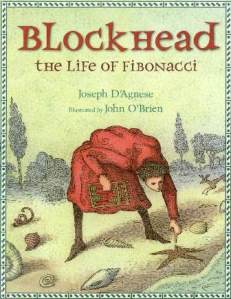
Blockhead: The Life of Fibonacci
Joseph D’Agnese, text
John O’Brien, illustrations
Henry Holt and Company, 2010
40 pp.
Age: 7+
Interests: math, history, science, biography, Middle Ages, Italy
09 Feb 2012 Leave a comment
in Authors, Books, Introduction to... Tags: British history, history
 Here’s a good article, it made me want to run out immediately and get Nicholas Nickleby to read to my five-year-old. Hmm, perhaps better to work our way up to it…
“Let’s give our children great expectations” by Allison Pearson in The Telegraph
I’ve jotted down a couple of her suggestions for younger-age introductions to Dickens, namely:
The Muppet Christmas Carol – “admittedly a great work in its own right, but slightly lacking the moral heft of, say, Bleak House” – This is a lighter, funny presentation of the classic story that, nonetheless, doesn’t omit any of the hard stuff… the frightening appearance of the last ghost, Scrooge’s visions of his own death … And Michael Caine holds his own amidst a host of fuzzy muppets.
Oliver! – of course, the lively, fantastic musical by Lionel Bart brought to the screen in full splendour by Richard Lester.
“Gill Tavner’s excellent condensed Dickens Real Reads” – will definitely look these up. (Here’s an amazon search.)
And now that I’m at it, here are a few more suggestions off the top of my head:
A Christmas Carol movie – look up the more classic versions of it, if you don’t want to “muppet” it up. The story is gripping enough to keep young viewers engaged throughout, even without Kermit. Perhaps the most famous is the Alastair Sim version from 1951 (aka Scrooge), though there are many others. (Be aware that the 2009 film with Jim Carrey I’ve heard described as terrifying, so other versions may be better for young ones.)
Christmas Carol readings – once they know the basic plot, going to a live reading of the original may be fun. (Plus it’s usually for charity.) I took my four-year-old to one a couple Christmases ago. She only lasted halfway through, but seemed to get the drift, and enjoyed the acting and language of it all.
The Magic Fishbone – a children’s story by Dickens. Funny and odd.
A Tale of Two Cities – if you’re child goes crazy for adventure stories, don’t forget about this one! Also a fascinating introduction to the history of the French Revolution.
It just so happens I’ve been reading a book about children’s literature and culture that had the following to say about Dickens:
Like many other books written expressly for adults, these biographical novels [David Cooperfield, Great Expectations, Oliver Twist] became children’s classics, prescribed on children’s school curriculum because of the lucidity and sensitivity with which Dickens treated problems of youth. His writing seemed to dredge from the collective depths of youthful memory a way of characterizing early experience that contained a new sympathy for the child’s struggle to achieve understanding and control unruly feelings. In Dickens’s time this was a radical point of view.
– Kline, Stephen. Out of the Garden: Toys and Children’s Culture in the Age of TV Marketing. (Toronto: Garamond Press, 1993), p. 94
Dickens’ novels provide a perfect entry point for the study of other historical times. What child wouldn’t be interested in finding out how children used to live, ie. working in mines and factories? What child wouldn’t be immediately sympathetic to Oliver Twist and his plight?
As Allison Pearson points out, we often forget that in his day Dickens wrote what was regarded as rather “trashy” reads – cliffhanging, melodramatic serials. The strength of his books are the bare-bones of the stories, the wildly gripping plots, and this is what makes them so loved by so many after all these years. How fantastic it would be to introduce our children to his books in the year of the 200th anniversary of his birth!
07 Feb 2012 Leave a comment
in Books, books 7+ Tags: folktales, giants, history, horror, Jewish folklore, Magic, monsters, religion, violence, war
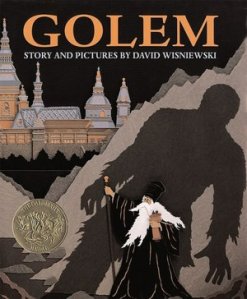
CALDECOTT MEDAL WINNER – 1997
by David Wisniewski
Clarion Books, 1996
30 pp.
Age: 7+
Interests: history, religion, Jewish folklore, giants, magic, horror
Next: there is a famous silent movie about this legend, The Golem (1920) by Paul Wegener
06 Feb 2012 Leave a comment
in Books, books 5+ Tags: airplanes, biography, France, history, inventions, scientists

CALDECOTT MEDAL WINNER – 1984
The Glorious Flight: Across the Channel with Louis Blériot
by Alice and Martin Provensen
The Viking Press, 1983
38 pp.
Age: 5+
Interests: history, biography, inventors, airplanes, France
Next: science/invention biography – Snowflake Bentley; more about France in this era – The Invention of Hugo Cabret; artistic style – look up works by Henri Rousseau
04 Feb 2012 Leave a comment
in Books, books 4+ Tags: American history, country life, farming, history, seasons

CALDECOTT MEDAL WINNER – 1980
Donald Hall, text
Barbara Cooney, illustrations
Viking Press, 1979
38 pp.
Age: 4+
Interests: history, farming, country life, self-sufficiency, seasons, American history, New England, folk art
Also by this illustrator: Miss Rumphius
12 Jan 2012 Leave a comment
in Movies, movies 4+, Old Movies Tags: American history, circus, cowboys, history, song and dance, strong girls, theatre
Colour, Musical
Released: 1950
Rated: Approved (G)
Length: 107 min
Age: 4+ (5 or 6 for fuller comprehension) (commonsense media sez 6+)
Scary Factor: nothing scary
Violence: a lot of guns, naturally, but all used for target shooting; only one re-enactment of an Indian attack, make sure kids understand it’s all a big circus act and nobody is really being shot; Frank gets mad at one point and punches somebody, but it’s a rather isolated event
Other: racial insensitivity, depicting Native Americans as uncivilized for comic purposes; lots of “ugh’ and “how”-type dialogue
Interests: famous women, history, cowboys, Wild West, circus/theatrical, musicals
Next: for girl cowboys see Annie Oakley (1935), Calamity Jane (1953); for Wild West musicals see Calamity Jane (1953), The Harvey Girls (1946), Seven Brides for Seven Brothers (1954); or visit your library to find historical accounts of the real Annie Oakley and her times
05 Jan 2012 Leave a comment
in Books, books 10+ Tags: British history, folktales, history, medieval history, poetry, Robin Hood

GREENAWAY MEDAL WINNER – 1959
compiled by Ruth Manning-Sanders
illustrated by William Stobbs
London: Oxford University Press, 1959
245 pp.
Age: 10+ ?
Interests: medieval history, British history, poetry, legends, folklore, Robin Hood
Also by this illustrator: Kashtanka
09 Dec 2011 Leave a comment
in Books, books 4+ Tags: Christmas, helping others, history, music, religion, saints
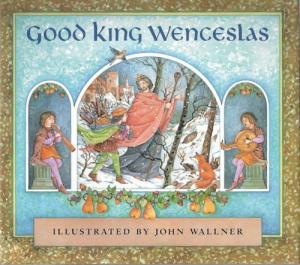
Good King Wenceslas
traditional carol lyrics by John Mason Neale
illustrated by John Wallner
New York: Philomel Books, 1990
30 pp.
Age: 4+
Interests: Christmas, Christmas carols, music, history, saints, stories of charity
06 Dec 2011 Leave a comment
in Movies, movies 6+, Old Movies, Silent Movies Tags: cities, city life, class, history, romance
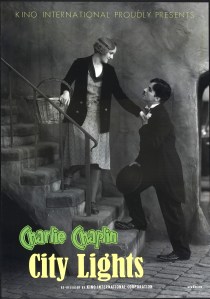
Black & white, Silent
Released: 1931
Rated: G
Length: 87 min.
Age: 6+ commonsense.org sez: 8
Scary factor: Guns are brandished, especially during burglary, but more for comedic effect – no harm is done.
Violence: General slapstick knock-about humour. The Tramp is (cleanly) knocked unconscious in the boxing ring.
Questionable behaviour: drinking and drunken behaviour (including reckless driving) for humour; smoking cigars; wealthy drunk friend is suicidal in several instances
Interests: silent movies, history, city life, love story, money and class
Next: The Gold Rush, Modern Times, Buster Keaton’s Sherlock Junior


 Rarest Kind of Best