
Ug: Boy Genius of the Stone Age and His Search for Soft Trousers
by Raymond Briggs
London: Jonathan Cape, 2001
28 pp. – graphic novel
Age: 8 +
Interests: history, science, inventions
Also by this author: The Mother Goose Treasury, The Snowman
Talking about children's books and films. Useful information for parents.
06 Jul 2011 Leave a comment
in Books, books 8+ Tags: cavemen, history, inventions, science
Ug: Boy Genius of the Stone Age and His Search for Soft Trousers
by Raymond Briggs
London: Jonathan Cape, 2001
28 pp. – graphic novel
Age: 8 +
Interests: history, science, inventions
Also by this author: The Mother Goose Treasury, The Snowman
06 Jul 2011 Leave a comment
in Books, books 6+ Tags: adventure, grandparents, horror, Magic, mice, witches
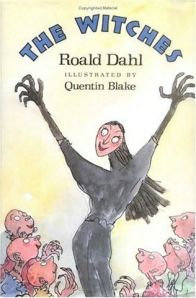
by Roald Dahl
illustrated by Quentin Blake
London: Jonathan Cape, 1983
208 pp. – 22 chapters
Age: 6 +
Interests: witches, magic, mice, adventure
06 Jul 2011 Leave a comment
in Movies, movies 4+, movies 5+, movies 6+, Old Movies, Quick Lists, Silent Movies

 It’s often hard to find silent movies on DVD, but the classics are out there, as well as collections of short subjects. Be aware of how your child might react to real knock-down slapstick humour – some may find it a little upsetting. (I tried a few Chaplin shorts on my 3-year-old and they were a little too much for her!)
Of course you’ll have to read the title cards… though a version of The Gold Rush is available that’s narrated by Charlie Chaplin himself!
Here are five brilliant and funny silent movies for the whole family.
1. Sherlock Jr. (1924) – Buster Keaton – 4+
Meek projectionist dreams of being a world-famous detective. Visual effects and stunt tour de force. See full review.
2. Safety Last (1923) – Harold Lloyd – 4+
A department store clerk arranges for a stuntman to climb the building as a publicity stunt, but then finds he must make the daring climb himself. (You all know the famous clock-hanging shot!)
3. The Gold Rush (1925) – Charlie Chaplin – 5+
Charlie’s Tramp goes to the Klondike in search of gold, goes through hard times, falls in love. Some menacing with rifles, a bad guy shoots Mounties, then dies in avalanche. A bear is shot (offscreen) for food.
4. Steamboat Bill Jr. (1928) – Buster Keaton – 6+
Bill Jr., a puny and delicate lad, tries desperately to impress his burly steamboat captain dad.
5. Modern Times (1936) – Charlie Chaplin – 6+
The Tramp struggles to survive in the modern world, undergoes a stint in jail and another in a factory. Some gunplay, usual slapstick stuff, plus smoking, accidental drunkenness, and accidental ingestion of “nose powder”, resulting in crazy behaviour.
05 Jul 2011 Leave a comment
in Books, books 5+ Tags: American history, animals, bears, country life, hunting, nature

CALDECOTT MEDAL WINNER – 1953
by Lynd Ward
Boston: Houghton Mifflin Co., 1952
85 pp.
Age: 5+
Interests: nature, farms, hunting, bears
29 Jun 2011 Leave a comment
in Movies, movies 4+, movies 5+, Quick Lists



Nothing is harder than selecting one movie that will keep older kids and adults entertained, and yet not terrify or totally baffle the very young. Ever since Walt Disney practically invented the ‘family film’, covering both ends of the age spectrum has become a tightrope-walk for film producers dreaming of huge dividends. Unfortunately the youngest viewers often get the short end of this stick, as too many of these movies are overflowing with clever cultural references that only their parents will appreciate, and scenes of terror and violence aimed squarely at their teenage brothers.
In general, you will always do well with Pixar flicks, as they are all so intelligently done that they are sure to delight everyone. In fact Pixar occupies 3 spots out of my list of 5 below. Some of the Pixar films, however, are a little more violent and aimed a little older – I’ve picked the best titles for youngsters below.
Here are my picks for pleasing every age group. Click on titles to read full reviews.
1. Wall-E (2008) – age 4 to adult
Little ones will adore Wall-E himself; teens will guffaw at the dystopian vision; parents will appreciate the environmental message.
2. Finding Nemo (2003) – age (brave) 4 to adult
Little ones will love the characters and strange sea creatures; teens will like the scares and dentist humour; parents have a message aimed at them – let your child have adventures and don’t worry so much. Plan a trip to an aquarium afterward.
3. Yellow Submarine (1968) – age 5 to adult
Little ones will find it bizarre and funny; teens will pick out the deadpan puns delivered by the way too-cool Beatles and enjoy the music, which still holds up (in my opinion anyway); parents will love the nostalgia factor and 60s art design. Looks and sounds like no other movie.
4. Toy Story (1995) / Toy Story 2 (1999) – age 5 to adult
Little ones will love the walking talking toys; teens will enjoy the smartassed dialogue; parents will find the themes of abandonment and existential dilemmas strangely moving.
5. The Iron Giant (1999) – age 6 to adult
Little ones will love the friendship between boy and robot; teens will love the beatnik, the outsider angle, the bathroom humour, as well as the destruction and battle scenes; parents can ponder the paranoia of the Cold War era and and cry over the ending… no, everyone will cry over the ending and then get a happy surprise at the very, very end.
28 Jun 2011 Leave a comment
in Movies, movies 6+ Tags: action, American history, robots, sci fi

Rated: PG – for fantasy action and mild language
Length: 86 minutes
Age: 6+ Commonsense media sez: 6 +
Scary Factor: plenty!… fishing boat goes down in storm (fisherman survives); the robot gets zapped at power station in a loud scene; scared boy runs away from robot; stressful scene in which robot is hit by a train; government agent menaces boy and threatens to take him away from his mom; boys fall from building but robot saves them; big ending has lots of action as army attacks robot and he returns fire; a nuclear missile is launched, heading directly for the town
Intense Scenes: robot learns about death when he sees a stag shot dead by hunters; during battle it briefly appears as if Hogarth is dead but he is soon pronounced unconscious; the moment when townspeople realize they are all going to die when the missile lands is quiet but intense; plus final climax in which robot saves the town is very, very sad and moving (but hang on for the ending!)
Language: “oh my god!”, a few “hell”s, and “you just blew millions of government dollars out of your butt!!” – these warranted the PG?
Bad Behavior: villain smokes a pipe, a boy drinks a little too much espresso and goes a little haywire in a funny scene
Interests: science fiction, robots, action, history (Cold War era)
Next: book The Iron Man by Ted Hughes, other movies written/directed by Brad Bird: The Incredibles, Ratatouille
28 Jun 2011 Leave a comment
in Books, books 5+ Tags: beach, Magic, mystery, nature, ocean, photography, sea creatures

CALDECOTT MEDAL WINNER – 2007
by David Wiesner
New York: Clarion Books, 2006
Age: 5+
Interests: ocean, ocean creatures, nature, beaches, photography, magic
Also by this author: Free Fall, Tuesday, Sector 7, The Three Pigs
28 Jun 2011 Leave a comment
in Books, books 4+ Tags: dragons, Fairy Tale, family, travel
 GREENAWAY MEDAL WINNER – 1969
The Dragon of an Ordinary Family
Margaret Mahy, author
Helen Oxenbury, illustrator
London: William Heinemann, 1969
40 pp.
Age: 4+
Interests: dragons, fantasy, travel
Also by this author: A Lion in the Meadow, The Seven Chinese Brothers, The Man Whose Mother was a Pirate
Also by this illustrator: The Quangle Wangle’s Hat, We’re Going on a Bear Hunt, Farmer Duck
27 Jun 2011 1 Comment
in Books, books 3+ Tags: animals, country life, farm, folktales, fox, history, rooster
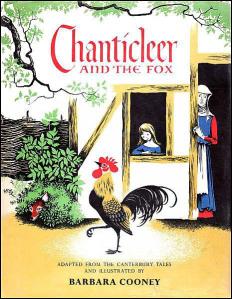
CALDECOTT MEDAL WINNER – 1959
by Barbara Cooney (adapted and illustrated by)
New York: Thomas Y. Crowell, 1958
32 pp.
Age: 3+
Interests: folktales, farm animals, roosters
Also by this illustrator: Miss Rumphius


 Rarest Kind of Best
TV for Babies
01 Jul 2011 Leave a comment
by Kim in Commentary, Disney, Infant Learning - 1st Three Years, Issues
I’m wading into somewhat controversial territory here, but I just wanted to talk a bit about TV and babies…
There is a myth out there, an enormous behemoth of a myth, regarding babies and their brains. The myth incorporates concepts both uncontroversial (talking to your baby is good) and unsubstantiated (showing your baby the right video will make them smarter). The basic idea is that in the first three years of life important learning and brain formation is taking place and if capitalized upon in this crucial period, your baby will have a ‘leg up’ on learning later. Indeed, infancy may be such a ‘critical window’ that your child may not be able to learn certain things later if they don’t learn them right now. This is the basic premise that ensnares unwary parents, enticing them to buy all manner of products, books and videos, from baby sign language flash cards to early reader videos and classical music mobiles.
I’m not pointing the finger here – I too was hooked. I endeavoured to teach my baby sign language, though we got no further than “more” and “all done” for mealtimes, which was actually fairly useful. When I was slow to purchase a mobile for over the crib, I worried that I was losing valuable ‘enriched environment time’. And when I finally did acquire a mobile I congratulated myself on finding one that played classical music! So much better than childish jingles! I also fell prey to the Baby Einstein phenomenon. When my daughter was born everyone, and I mean everyone had these videos in their collection and we did too.
The reason that so many fall for this Big Myth and buy the products is that it targets the time right after birth, a time of maximum anxiety and minimum ability to do the research for ourselves. During pregnancy all thought and anxiety is placed upon the basic health of the mother, and looking ahead to childbirth. The books I had listed in excruciating detail every single little thing that could go wrong before and during birth. In the week-by-week guide I had they actually had a new health danger under every single week, just to spread the anxiety out over the entire gestation I suppose. At any rate I didn’t think much about baby’s first months before we were right into them.
And when the bundle of joy arrives is when things get really hectic. The lack of sleep and general weirdness of life with a new baby means that your focus narrows to just what is at hand. Crisis management. The only outside voices that cut through the haze and find their way into your brain are those that are giving you advice on parenting. And by ‘giving you advice’ I mean criticizing you. You have neither the time nor the energy to read deeply on any subject, never mind cutting-edge brain research. It is sufficient to glance at a headline telling you to ‘enrich’ baby’s environment as much as humanly possible. Or to play classical music to build up their brains. Or to expose them to foreign languages… even if you don’t speak them yourself. Parents are told they should:
“… make use of the windows of developmental opportunity nature has provided, applying a full-court developmental press every minute during the birth-to-3 developmental season. Failure to exert full-court pressure can have long-term consequences. …The implications are sufficiently dire to make most middle-class parents take notice. The advice provided is sufficiently vague to leave parents deeply uncertain and profoundly anxious about what they should do differently and about what does matter – other than everything – during the early years.” ¹
Doesn’t this sound painfully familiar? This type of advice puts the pressure on and gives you a deadline as well, asserting that by the time your child starts school, his best learning years are already over. If you miss the boat, it’s all over by age six.
Now the ‘experts’ have been telling parents what to do for a long time now. Thomas Cobbett in 1656 counselled parents to keep a “due distance” between themselves and their offspring, because “fondness and familiarity breeds and causeth contempt and irreverence in children.” ² From the ancient Greeks and onward through Locke, Rousseau, Freud, and Spock, the winds of philosophic fad and scientific fancy have blown parental advice back and forth for centuries, but the current pressure placed on the narrow time span of age zero to three is unprecedented.
And we swallow it, hook, line and sinker. Why wouldn’t we? In the first year of our child’s existence biological imperatives are running our lives: the desire to protect and care for our child is overwhelming, and intense love and hormones are turning us into crazy people who cry whenever a child is hurt on tv. (And don’t tv shows love to push that button!) So when newspapers or magazines or advertisers trumpet that the latest brain science says you should buy a black and white checkered dangly squeeze toy for your stroller, or you run the risk of lowering your child’s IQ… you do it!
The problem is that the actual research is habitually twisted by the media, advertisers, and lobby groups into convenient but inaccurate conclusions.
Do you remember hearing about research proving that classical music makes you smarter? This premise inspired state legislators in Georgia and Missouri to spend taxpayer dollars on classical CDs for newborns. It also provided the impetus for many Baby Einstein (and similar) products with a soundtrack of Beethoven, Bach or Mozart.
Classical music to make your baby smarter. A gorgeous idea. (And one that feeds brilliantly into Western middle class cultural snobbery.) Borne out by the research? Nope. The research that prompted all this had nothing to do with babies – it looked at how listening to Mozart affected the reasoning skills of college students… for periods up to ten minutes! Another study was of preschoolers given keyboard lessons and showing improvements in spatial reasoning for several hours. That’s it. Nothing about infant development at all.³
Beyond that, the research that is said to support the idea of an enriched environment for baby (the nursery as a jungle of vibrant eye candy), actually deals more with a normal environment being better than a deprived one. In other words, it’s not a good idea to raise your child in a dark closet with no stimulus, and not speak to him.
“Brain science has not pointed to new ways of raising or teaching children that will really stimulate those synapses above and beyond what normal experiences provide. … brain-based parenting amounts to doing no more than what most parents do normally.” ⁴
Which brings us to the issue of tv for babies. This is where things get personal, because everyone has their own thoughts on whether or not television is a blight on society or a saviour. You can go out and find a book to bolster whatever opinion you already have. Right here I am just going to go with my reactions, as they developed over time. In a nutshell:
1. Trying out a Baby Einstein video on my one-year-old: “YAY! She loves it! Thirty minutes of blessed freedom!”
2. “I am such a good parent. Listen to that classical music. She is going to be a genius!”
3. (this was the film student in me speaking): “Hmmm… the cutting in these is awfully quick.” (“Look, honey, that’s a… oh, it’s gone now. But it was a cow.”)
4. when she could spot the Baby Einstein logo from a mile away, and was drawn to it like a moth to a flame: “My baby’s been branded by Disney! Aaarrrghhh!” ⁵
Allow me to share with you some information gleaned later from a book that takes into account all the research done to date on children and television: The Elephant in the Living Room: Making Television Work for Your Kids, by Dimitri A. Christakis, and Frederick Zimmerman, published in 2006.
First, regarding the rapid cutting of tv shows:
“… attention (or thought while looking) deepens as a child looks at an object. Children usually take a few seconds to grasp an object visually before they can begin to think about it. … Careful experiments have shown that engagement reaches a maximum after about 20 seconds of looking at an object or a scene. Shorter looks are less likely to produce thoughtful looking and more likely to result in rapid distraction. In this sense, rapid scene changes on television can keep a child looking but not thinking.” ⁶
And, regarding Baby Einstein videos in particular, which can have cuts, or scene changes as frequently as every 4 seconds:
“… babies are transfixed by these videos, and the rapid scene changes are a big part of the reason … Young infants aren’t capable of understanding the content, and they don’t try to create a narrative from these images. For them, it isn’t a day on the farm at all; it’s just a series of stimuli coming at them full throttle. They will sit in front of the 30-minute feature not because they are interested in the content but because they are biologically programmed not to look away.” ⁷
They also point out that when an 18-month old looks at a book, they control the pace, and look at each page from 15 to 30 seconds on average. Whereas:
“… television shows change images every 7 to 8 seconds on average for educational shows … and every 3 to 4 seconds for noneducational shows… rapid scene changes may keep children’s focus, but they don’t allow them to devote their full attention to the scene.” ⁸
(I timed shot lengths for three Baby Einstein videos. Results at bottom of page.)
In the end Christakis and Zimmerman conclude that “you should avoid letting your children under 2 watch TV. There is no proven educational value at this age, and … there is considerable cause to be concerned about potential harm.” ⁹
This is not an isolated opinion. In fact, the American Academy of Pediatrics offered this recommendation five years earlier, in 2001:
“Discourage television viewing for children younger than 2 years, and encourage more interactive activities that will promote proper brain development, such as talking, playing, singing, and reading together.” ¹⁰
Indeed, this recommendation provided the backbone for an ongoing battle between Baby Einstein and researchers (including Christakis) regarding the products’ educational claims.
Most recently: “Baby Einstein Creators Challenge Research Anew”¹¹
So in the end I feel that it might have been better not to turn on the tv at all until she turned two, but I’m not overly concerned. The thing to remember, I think, is that the zero to 3 age range is not as ultra-crucial as we’ve been led to believe. Infants take in all stimuli, good bad and indifferent, and learning continues on… even into adulthood (!). There are no critical windows slamming shut on your child’s third birthday.
Above all, if the information here (or elsewhere) makes you feel like you’ve been doing everything terribly wrong for your infant’s brain development, as long as you haven’t kept your baby in a sensory deprivation situation, just take a deep breath and repeat after me: “Brain plasticity. Brain plasticity. Brain plasticity.”
(And when my child does turn out to be a genius, I’m going to attribute it to her efforts, not Baby Einstein‘s, and not mine!)
_____________________________________
¹ John T. Bruer. The Myth of the First Three Years: A New Understanding of Early Brain Development and Lifelong Learning (New York: The Free Press, 1999) p. 17
² Colin Heywood. A History of Childhood (Cambridge: Polity Press, 2001) p. 85
³ Op. cit. Bruer, p. 63
⁴ Ibid., p. 66
⁵ Disney purchased 80% of the Baby Einstein company in 2001.
⁶ Dimitri A. Christakis and Frederick J. Zimmerman. The Elephant in the Living Room: Making Television Work for Your Kids. (New York: Rodale, 2006) p. 19
⁷ Ibid., p. 23
⁸ Ibid., p. 27
⁹ Ibid., p. 34
¹⁰ American Academy of Pediatrics, Committee on Public Education (February 2001). “Children, Adolescents, and Television (policy statement)”. Pediatrics 107 (2): 423–426. doi:10.1542/peds.107.2.423. PMID 11158483.
¹¹Donna Gordon, “Baby Einstein Creators Challenge Research Anew”, Associated Press, Seattle, June 30, 2011, accessed July 1, 2011, 8:00 AM.
________________________________________
Now back to Baby Einstein and the pacing of the edits. I did a little timing myself and found the following:
the original BABY EINSTEIN, aka LANGUAGE NURSERY, 1997
Video of the Year Winner – Parenting Magazine
“Visual and multilingual experiences to stimulate and delight your baby”
26:11 long (body of film, excluding head and tail credits)
72 cuts
average shot length: 21.8 SECONDS
Still shots of toys (nothing moving) are consistently 7 seconds long.
Shots with camera movement or toy movement are longer.
Motherly voices saying children’s rhymes, counting, etc. in various languages.
Short promotional video afterward emphasizes that this video will not teach child to speak foreign languages… “what the soundtrack will do is stimulate portions of your baby’s brain that are largely ignored. Research indicates that babies are born with the ability to respond to, and to produce, any sound. By six months of age this ability begins to fade as the child hears only one language, and by 12 months the ability is gone. So it’s pretty simple. BE is a unique means of stimulating your child’s brain during the critical first years of life. The natural window of opportunity…” is 1-12 months of age.
What the research actually indicates is that babies learn to differentiate between subtle sounds made in their own language and not in others. This ability can be learned later – it does not simply disappear at 12 months.
——————————————–
BABY MOZART; Music Festival, 2004?
“A vibrant, award-winning musical feast for little eyes and ears”
24:57
92 cuts
average shot length: 16.3 SECONDS
Still shots are now only 4 seconds each, though stills of animals are as long as 9 seconds.
Longest shots are generally :30, though there is one dizzying 50 second stare at a lava lamp. (Totally justified, in my opinion.)
More closeups in this one – wide shots, then cut close. These tend to be 20 seconds each.
Series of moving toys: 10 seconds each.
At the end there is a very fast sequence of moving toys, each shot is 3-4 seconds long.
Promotional short at end is much more cautious at this point, and does not mention brain stimulation. Videos are claimed to be suitable for infants from birth onward. Creator says “the most important thing we’ve done is to encourage parents to interact…” – never mind that the vast majority put the video on so they can leave the room and get something done!
While promoting the extra merchandise now available, they exult that “Baby Einstein can be there all day long!” Yikes.
——————————————–
BABY BEETHOVEN; Symphony of Fun, 1999/2009
“Visual treats and musical masterpieces to stimulate and delight your baby”
24:34
118 cuts
average shot length: 12.5 SECONDS
Stills of baby faces are held for 6 seconds each.
Scenes of kids interacting with toys – 8 seconds each.
Reluctance to sit on a wide shot – many pans, zooms, cutting to different angles on the same toy (could be confusing).
Cutting to the music at times, which sacrifices shot length.
Promotional short: “Probably the most important thing that we’ve done is to encourage parents to sit with their children, to interact with their children, to dance with their children.” De-emphasizing educational claims, now merely claiming to expose your baby to art, music, science (?) etc. Plus the strange claim that they have “reorchestrated” Beethoven “in a way that is appealing to babies’ ears”.