What are babies thinking?

This is a terrific TED talk about what is going on in our children’s heads… more than you might think… Also, a suggested link between length of childhood and intelligence of species.

I love this stuff! Have already ordered her latest book from my library…

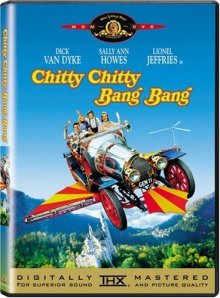
Chitty Chitty Bang Bang (1968)

Chitty Chitty Bang Bang
Released: 1968
Rated: G
Length: 144 min. (with an intermission at the 1:27 mark)
Age: 6 and up            Commensense Media sez: 6 +

Scary Factor: fantasy adventure story abounds in peril but all is exaggerated and cartoonish; the Baron and his spies are too bumbling to be truly scary; the Child Catcher on the other hand is extremely creepy, he’s the scariest thing in the movie, especially when he captures Jemima and Jeremy

Intense Scenes: all the children living underground is a rather pathetic sight, it stuck with me as a child; Caractacus and Truly posing as dolls is a bit suspenseful, but mostly amusing

Questionable Language: apparently Grandpa says “ass” at some point

Other Violence and Mayhem: the Baron and Baroness are pretty weird, especially the Baron’s sly attempts to do away with his wife, particularly during their cutesy song together before the party; in an earlier scene the Baroness is ejected high into the air, she floats gently down thanks to her large skirts and the Baron hauls out his shotgun and shoots at her! (the resulting holes in her billowing skirt bring her down quickly, and he expresses disappointment that he only hit her skirt!)

Interests: cars, inventions, magic, action, adventure, castles, scientists, inventors, spies, musicals

Next: Ian Fleming book Chitty Chitty Bang Bang (very different plot)
More

Are Your Kids Really Ready for Scary Movies?

Commonsense Media has posted some advice for parents about scary movies.

A Roald Dahl Reading List

The wonderful world of Roald Dahl is sharp, irreverent, sometimes violent, sometimes gross, and nearly always funny as hell. I’ve been reading all the Dahl I can get my mitts on lately. Here they are in the order I’d recommend reading them, from younger listeners to older.

More

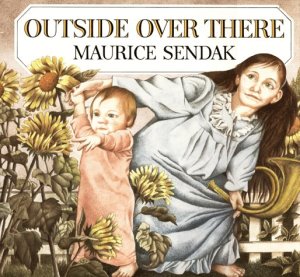
Outside Over There

Outside Over There

by Maurice Sendak

New York: HarperCollins, 1981

40 pp.

Ages: 4+

Interests: magic, goblins, babies, babysitting, siblings

More

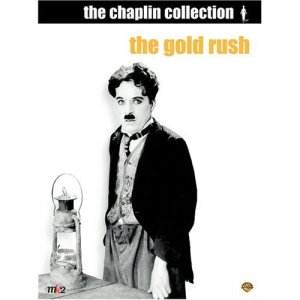
The Gold Rush (1925)

The Gold Rush  (1925)

Written, directed by, starring: Charlie Chaplin

Rated:  — (unrated)

Length:  95 min. 1925 release / 72 min. 1942 re-release

Age: 5 and up          Commonsense Media sez: 8 +

Scary Factor: Little Tramp menaced periodically for comedic effect; two men struggle over a shotgun which is always pointing at the Tramp; he is also chased by starving, hallucinating miner with a gun and then an axe; cabin tipped precariously on edge of precipice; all threats are treated comically and violence is bloodless and kept at a distance

Intense Scenes: a wanted criminal shoots and kills two police officers before perishing in an avalanche

Other: a bear is shot offscreen for food; some smoking and drinking

Interests: old movies, silent movies, arctic adventure, history

Versions: restored 1925 print is 95 minutes long, with piano music and title cards; 1942 sound release is 69 minutes long, has an orchestral score, no title cards, narration written and performed by Charlie Chaplin

Next: other Chaplin – Modern Times, City Lights

See also: Top 5 Silent Movies for Preschoolers
More

The Adventures of Ichabod and Mr. Toad (1949)

The Adventures of Ichabod and Mr. Toad

Released: 1949

Rated: G

Length: 68 min.

Age: 5 +

Scary Factor: lots of shooting guns; battle for Toad Hall extremely violent, flying knives and axes; much slapstick humour

Bad Behaviour: weasels depicted as dead drunk in Toad Hall sequence

Dangerous Behaviour: at one point Toad is blissfully inhaling car exhaust (!?!), to show how much he loves automobiles

Interests: animal stories, automobiles, ghosts, ghost stories

Next: read the originals- The Wind in the Willows  by Kenneth Graham, and the short story The Legend of Sleepy Hollow by Washington Irving More

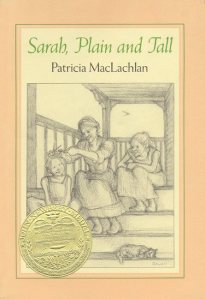
Sarah, Plain and Tall

NEWBERY MEDAL WINNER – 1986

Sarah, Plain and Tall

by Patricia MacLachlan

New York: HarperCollins, 1985

58 pp., 9 chapters

Ages: 5 +

Interests: history, farm life, prairies, stepmothers

Next: the sequel Skylark

More

Top 5: Beginner Dahl

Roald Dahl’s books are notoriously violent, scary, rude, gross, full of extremely bad behaviour and insulting language, and above all tremendously funny. Now, there’s nothing wrong with any of this, especially not when the stories are so well-written and inventive, but parents may prefer to start with some of the more ‘benign’ Dahl titles, before working their way up to James and the Giant Peach, or Matilda, or The Witches.

Lately I’ve been working my way through all of Dahl’s children’s books (he also wrote for adult audiences), and while I haven’t quite finished my “Dahl-Readathon”, I have found five titles that are more suitable for younger ages.  (A more complete Roald Dahl Overview to come once I’ve finished all the books.)

Here they are, in order of mildness…

1. Esio Trot (1990) – 62 pp.- Ages 4 +

The gentlest tale of all. No violence, no nastiness whatsoever. The story of how a shy older gentleman wins the lady of his dreams with ingenuity, patience, and a lot of tortoises. (This title on amazon.)

2. The Giraffe and the Pelly and Me (1985) – 80 pp. – Ages 4 +

A boy befriends the new window-washers in town – a rather magical team of Giraffe, Pelican and Monkey. During their first job they capture a burglar, impressing the Duke of Hampshire and securing great success for all. Generally happy and peaceful, except for one incident: burglar shoots off a gun while captured in the Pelican’s beak, creating a hole but not harming anybody. (This title on amazon.)

3. The Magic Finger (1964) – 63 pp. – Ages 4 +

A little girl teaches a family of hunters to see things from another point of view, by having them trade places with the birds they shoot at every day. Very funny. (This title on amazon.)

4. The Enormous Crocodile (1978) – 42 pp. – Ages 4 +

Very short and readable story about a crocodile with “secret plans and clever tricks.” Or so he thinks. The crocodile steals into the town intending to munch on children for lunch but the other jungle animals always call the alarm before he can succeed. In the end the elephant forcibly ejects the crocodile by flinging him all the way to the sun, where he is “sizzled up like sausage!” (The crocodile’s talk about crunching up small children might be too much for some, but it is all talk.)  (This title on amazon.)

5. Danny the Champion of the World (1975) – 196 pp, 22 chapters – Ages 5 +

A lesser known, totally sweet story of a boy with a wonderful single father who teaches him the secrets of poaching. The boy, Danny, devises a fantastic plan for the biggest pheasant heist ever, with unexpected and hilarious results. Unusual topic, yes, with a little class warfare thrown in. Much suspense during the poaching adventures, but without violence or rudeness.  Highly recommended. (This title on amazon.)
Changes to classic Richard Scarry book

I’ve discovered an interesting comparison between 1963 and 1980/1991 editions of Richard Scarry’s Best Word Book Ever posted on the website Sociological Images.

Apparently it’s easy to get outraged about “bowdlerization” of the classics and the perceived crimes of “PCness” (read the endless comments!… no, don’t), but one must remember that this is a reference book, a word book teaching vocabulary, and its purpose is not compromised in the least by these changes. (It’s not like an actual plot is being changed or anything, since there is no plot.) The only loss is a bit of the humour (the “beautiful screaming lady” in the burning house I thought was kind of funny).

Still, it is an interesting exercise to see exactly what has been changed and how. The gender changes accomplished simply through the addition of a hair ribbon I particularly liked.

For the original, more detailed comparison on Alan Taylor’s Flickr stream, go here. (Alan’s comparison was done between the 1963 and 1991 editions, though several comments mention that the 1980 version is the same as the 1991.)

Previous Older Entries Next Newer Entries

All writings posted here are © Kim Thompson, unless otherwise indicated. For all artwork on this site, copyright is retained by the artist.