Why Kill Off the Parents? Or, The Role of Grownups in Children’s Stories

Bambi

Even parents who are fans of Disney films are often bothered by one aspect of them, namely: “Why do they always have to kill off the parents?”  We spend our days providing safety and a sense of security for our children, but as soon as we pop a kiddie movie into the player BAM! Our wee ones are faced with terror, violence, death and somebody becoming an orphan, all usually within the first fifteen minutes. More

Fairy Tale Controversy, Part 3: Modern Times

[Previously:  Fairy Tale Controversy, Part 1 ; Fairy Tale Controversy, Part 2: Coming to America]

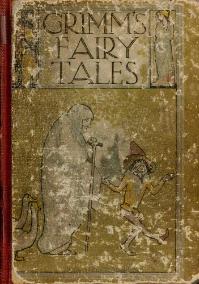
Fairy tales are no less controversial today than they ever were in the past. The arguments against them echo some of the concerns of the past, and add new ones. Sexual content or innuendo in tales for children is still prohibited. We are less concerned about maintaining class distinctions, but we definitely have a lower tolerance for grisly violence than audiences of the past. And we have added the relatively recent concerns of racism and sexism to the mix. As well, parents today seem inordinately bothered by death scenes in children’s literature. In past times, the death of a parent, of a mother in childbirth, of babies and young children was much more common than today, and therefore found a place in the literature. Today we seem uneasy with the very subject, a modern preoccupation.

More

Fairy Tale Controversy, Part 2: Coming to America

In my last commentary I talked about the opposition that rose up in Britain against fairy tales as suitable literature for children. Another stronghold of anti-fairy tale sentiment lay across the ocean in America. The New World objections to Old World tales tell us much about the psychology of the new frontier nation.

More

Fairy Tale Controversy, Part 1

“Why should the mind be filled with fantastic visions, instead of useful knowledge? Why should so much valuable time be lost? Why should we vitiate their taste, and spoil their appetite, by suffering them to feed upon sweetmeats?” – Maria Edgeworth, Preface to The Parent’s Assistant (1796) ¹

Fairy tales go back a long way. Early versions of “Beauty and the Beast” were told in classical Greece and ancient India.²  A written version of “Sleeping Beauty” exists from the 20th Dynasty in Egypt.³  It’s truly astonishing how similar folk and fairy tales are across all cultures, sharing plotlines, characters, themes and motifs. The most well-known stories today are only a tiny fraction of thousands of stories from all parts of the globe, and come to us largely from two publications: Histoires ou Contes du Temps passé by Charles Perrault (1696) and the German collections of Jacob and Wilhelm Grimm (1812-1857).

More

Watching Old Movies

Wouldn’t it be pleasant to sit down and watch a movie with your kids that wasn’t presold on sequels and Happy Meals? Or take them to an action movie that didn’t either freak them out or weigh down their little bones with premature irony? – Ty Burr, The Best Old Movies for Families

When I talk about Old Movies I don’t mean going back to Toy Story 1, or even aaall the way back to the first Star Wars (though 1977 does seem long, long ago in a galaxy far far away)… I’m talking about Oooooold movies here.

You may not have any interest in old movies, indeed, I realize not everyone has spent a lifetime loving them like I have. But if you are old enough to be a parent, you are certainly aware of how much movies have changed since the flicks you watched as a kid. They’ve changed for the better, in terms of technology. The complex visual and sound effects of modern movies absolutely boggles the mind. (Just compare a Harryhausen Sinbad movie to Avatar!) And they’ve also changed for the worse… can you even imagine a world in which there were no teen slasher horror films?

Whether or not you know much about old movies, when it comes to picking films for family movie nights, there are many good reasons to turn to the oldies…

More

Know Your Movie Ratings

A few words on Movie Ratings…

The Motion Picture Association of America (MPAA) selects the familiar G, PG, PG-13, R, and NC-17 ratings for motion pictures.

It is important to fully understand these ratings and their drawbacks, however, before relying too heavily on them.

More

Picking Movies for Young Children

I don’t want this blog to just be reviews, so I am going to try to write a weekly commentary of sorts, posting every Friday. Well, we’ll see how it goes… Here’s the first.

Here’s a blogger’s humble confession. Rating movies for a particular age group is really hard.

I used to be so annoyed with reviews of kids’ movies that weren’t specific, that didn’t give me what I needed to know in a nutshell. “Not suitable for young viewers” just didn’t help me. (What is ‘young’?!)

So when I began this blog I was determined to stamp an age recommendation on every review. And I soon found out why those other reviewers choose to be so vague. As much as a frazzled parent may want concise advice with a minimum of fuss, the First Commandment of parenthood always holds:

EVERY CHILD IS DIFFERENT!

I will do my best to give my recommendations, but the precise age rating must always be regarded as a sliding scale – after reading my reviews you will know if your child tends to be above, below or right smack on my estimates and can proceed accordingly. And please double-check with any other books, websites or blogs that you trust. (I include the Commonsense Media age ratings, which are often a year higher than mine.)

More

Next Newer Entries

All writings posted here are © Kim Thompson, unless otherwise indicated. For all artwork on this site, copyright is retained by the artist.