
CALDECOTT MEDAL WINNER – 1955
Cinderella, or The Little Glass Slipper
translated and illustrated by Marcia Brown
New York: Macmillan, 1954
30 pp.
Age: 3 +
Interests: fairy tales, princesses, magic
Talking about children's books and films. Useful information for parents.
16 Jun 2011 Leave a comment
in Books, books 3+, Classics Tags: Fairy Tale, Magic, Princess, romance
CALDECOTT MEDAL WINNER – 1955
Cinderella, or The Little Glass Slipper
translated and illustrated by Marcia Brown
New York: Macmillan, 1954
30 pp.
Age: 3 +
Interests: fairy tales, princesses, magic
03 Jun 2011 Leave a comment
in Books, Classics, Commentary Tags: Fairy Tale
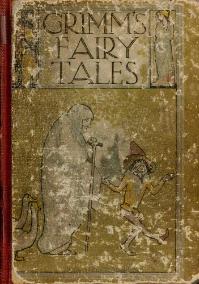
“Why should the mind be filled with fantastic visions, instead of useful knowledge? Why should so much valuable time be lost? Why should we vitiate their taste, and spoil their appetite, by suffering them to feed upon sweetmeats?” – Maria Edgeworth, Preface to The Parent’s Assistant (1796) ¹
Fairy tales go back a long way. Early versions of “Beauty and the Beast” were told in classical Greece and ancient India.² A written version of “Sleeping Beauty” exists from the 20th Dynasty in Egypt.³ It’s truly astonishing how similar folk and fairy tales are across all cultures, sharing plotlines, characters, themes and motifs. The most well-known stories today are only a tiny fraction of thousands of stories from all parts of the globe, and come to us largely from two publications: Histoires ou Contes du Temps passé by Charles Perrault (1696) and the German collections of Jacob and Wilhelm Grimm (1812-1857).
17 May 2011 Leave a comment
in Books, books 4+, Classics Tags: fairies, Fairy Tale, Magic, Princess, siblings, strong girls

subtitle: “A Holiday Romance from the Pen of Miss Alice Rainbird, Aged Seven”
by Charles Dickens
originally published 1868

this edition: illustrated by Louis Slobodkin, Vanguard Press, New York, 1953
36 pp.
Age: 4 +
Interests: magic, fairies, princesses
Also by this author (for children): The Cricket on the Hearth, A Christmas Carol
03 May 2011 2 Comments
in Books, books 5+, Classics Tags: Australia, fighting, food
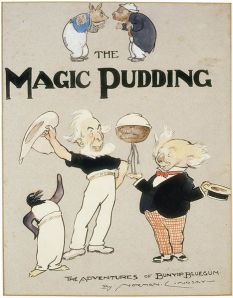
also known as: The Magic Pudding: being the adventures of Bunyip Bluegum and his friends Bill Barnacle & Sam Sawnoff
Norman Lindsay, author and illustrator
Sydney: Angus & Robertson, 1918
reprinted by Mineola, NY: Dover, 2006
137 pp; 4 chapters (or ‘slices’)
Ages: 5 and up, though vocabulary is a little difficult (chapter book)
Interests: animals, Australia, magic, food, fighting
More
20 Apr 2011 Leave a comment
in Books, Classics Tags: castle, Fairy Tale, goblins, Magic, Princess

by George MacDonald
1872 – originally published in London by Strahan & Co.
216 pp – 32 chapters
Age: 6+ (?)
Next: C. S. Lewis Narnia books, The Hobbit
Also by this author:
Dealings with the Fairies (1867) aka The Light Princess and Other Stories – includes the story “The Golden Key”, commonly regarded as a masterpiece
At the Back of the North Wind (1871) – along with P&G, his most famous work
The Princess and Curdie (1883) – sequel to The Princess and the Goblin, but a lot darker, more violent and destructive
28 Mar 2011 Leave a comment
in Classics
(Here’s my first Overview – a detailed look at a ‘classic’ book, including it’s historical context and how it’s changed through the years in various versions and media. I had thought to publish Overviews as simple posts, but this one has turned out so, um, voluminous that I think I will put it up as a page instead (ie. accessible through the menu at the top under “Overviews”, or here. Below is a Short Version, for those who have neither time nor patience with obsessive research…)
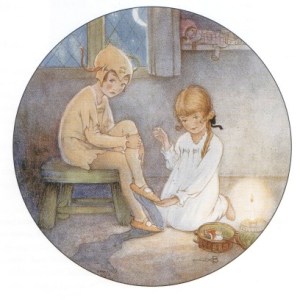
illustration by Mabel Lucie Attwell
“Every child grows up… except one.”
A mysterious boy named Peter Pan flies in the Darling family’s nursery window and entices Wendy, John and Michael to go with him to a magical place called Neverland. With the help of a little pixie dust from a fairy named Tinker Bell, they are able to fly away with him and encounter the real (yet deadly) land of their imaginations and dreams – a land where they never have to grow up. After many adventures there Wendy convinces her brothers that they must return to their anxious parents. Peter’s entire band of Lost Boys have enjoyed having a mother (Wendy) so much that they decide to go with them to the real world. Peter alone stays behind – he thinks parents and growing up is terribly overrated. As they exit the hideout, however, the children are captured by the evil Captain Hook and his pirates. Tinker Bell prevents Peter from drinking the poison Hook has left for him, and Peter rushes to rescue the others and do battle with the Captain. The pirates are vanquished and Hook is eaten by a crocodile. Peter returns the children to their nursery window, where their parents and dog Nana await. Peter refuses to stay, he prefers to remain a boy forever – no matter what the cost – and he flies off, back to Neverland.
(Note: story events can vary greatly from one version to the next.)


 Rarest Kind of Best
Fairy Tale Controversy, Part 2: Coming to America
11 Jun 2011 Leave a comment
by Kim in Books, Classics, Commentary Tags: Fairy Tale
In my last commentary I talked about the opposition that rose up in Britain against fairy tales as suitable literature for children. Another stronghold of anti-fairy tale sentiment lay across the ocean in America. The New World objections to Old World tales tell us much about the psychology of the new frontier nation.
More